Is TaroT EVil? – The Dangers of tarot Part I
“Is tarot evil?” When most people think of tarot, a familiar image often comes to mind. A dark room, flickering candles, a mysterious figure turning over cards and suddenly falling silent. A warning about death, danger or a terrible future! Sounds familiar? In films and television, tarot almost always appears at the moment when something really bad is about to happen.
These scenes are so common (honestly, just type in “tarot in movies” in a google picture search) that they have shaped how we view tarot in real life and honestly, when I first started discovering tarot, I was unsure myself.
So, are you thinking about getting a tarot reading or know someone who is involved in tarot and you’re asking yourself, whether you should be worried?
My answer to this question is simple – no! And I have some very solid facts to back up my opinion and I’ll explain why later on. But I also want to leave some room for being understanding as to why people might feel uneasy about tarot.
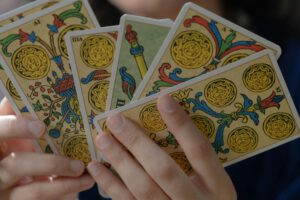
Looking for the perfect Tarot deck? 💖 My all time favorite is this one! It’s the borderless version of the classic Rider-Waite Tarot deck.
Reason No. 1 – Secret Societies and the Occult
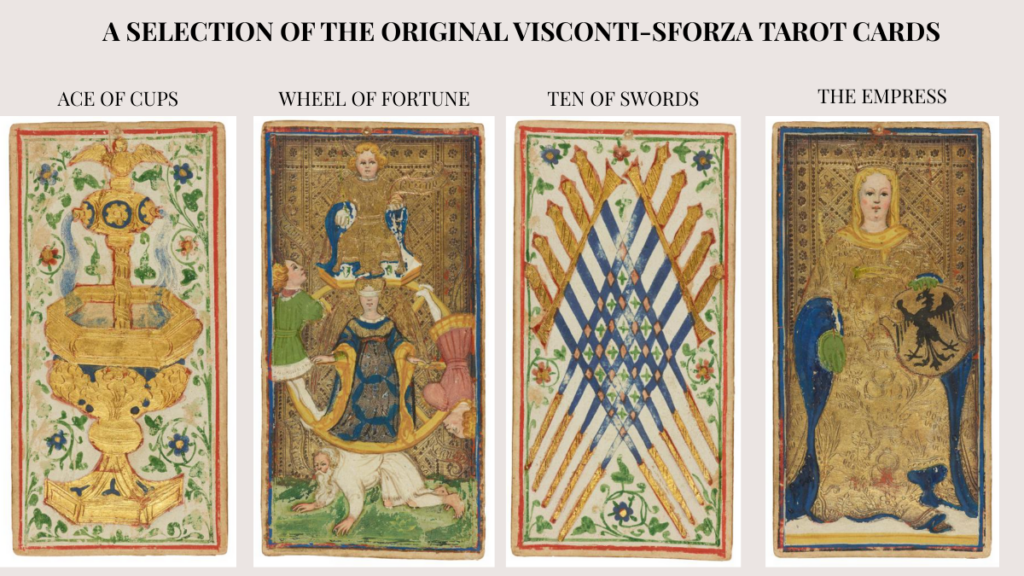
As a matter of fact, tarot actually has really ordinary (boring?) historical roots. Spiritual interpretations came later, and the cards became cloaked in mystery only through their association with secret societies. Tarot originated in Europe in the 15th century as a card game. Early tarot decks were used for entertainment, much like modern playing cards and actually had no spiritual purpose. They were popular in Italy and later spread across other parts of Europe.
So, how do we arrive at today’s mystical and occult view of the tarot?
Things changed in the 18th and 19th centuries, when tarot began to be reinterpreted by mystics and esoteric scholars. Groups such as the Hermetic Order of the Golden Dawn integrated tarot into complex systems involving astrology, symbolism and spiritual philosophy. From this point on, tarot was no longer just a game. It became a tool for personal and spiritual exploration.
When people hear that tarot was influenced by a secret society that explored the occult, it’s easy to jump to conclusions. “Occult” often gets translated into “dangerous” or even “satanic,” especially in popular imagination. In reality, what is known about the Golden Dawn paints a much calmer picture. Their work focused mainly on studying symbolism, philosophy, astrology, and spiritual traditions, and on using structured rituals as a way to support personal reflection and self-discipline.
Granted, even from today’s perspective the secret orders of that time seem strange – dealing with all sorts of spiritual philosophy, alchemy and magical rituals. One can only assume how people reacted to them at the time! However, there is no historical evidence that they practiced satanism or promoted anything harmful. Many members even came from traditional religious backgrounds. Their secrecy had more to do with protecting their privacy and preserving their teaching system than hiding anything sinister.
Reason No 2 – Tarot and Religious Beliefs
Another major reason why many people view tarot as “evil” is its perceived conflict with religious teachings.
In many religious traditions, especially Christianity, Islam, and Judaism, spiritual guidance is meant to come from God alone. Prayer, the study of scripture and faith are seen as the proper ways to seek direction and answers. From this perspective, practices like tarot can feel curious at best and dangerous at worst.
Tarot is often grouped together with divination, fortune-telling, and other spiritual practices that exist outside of formal religious structures. Because of this, it may be seen as trying to access knowledge or guidance through the “wrong” channel. For believers who take their faith seriously, this can feel like a form of disobedience or misplaced trust.
In addition, religious communities often warn against engaging with spiritual practices that are not clearly defined within their belief system. Anything unfamiliar can feel risky. When tarot is combined with candles and rituals, it may seem even more threatening to those who value spiritual clarity and boundaries.
Tarot in Movies, Television and Popular Culture
We’ve talked about Public perception of tarot is also shaped by how it appears in media.
In films and television, tarot is frequently connected to dark predictions, curses, or supernatural danger. Tarot readers are often portrayed as mysterious figures who foresee death, disaster, or tragedy. These portrayals are designed to create tension and drama, not accuracy.
Over time, these images influence how people think about tarot in real life. Even those who have never had a reading may associate tarot with fear, manipulation, or hidden threats simply because of what they have seen in fiction.
This gap between real-world practice and fictional depiction plays a major role in why tarot is sometimes viewed as dangerous or sinister.
Is TArot Evil? Bringing It All Together
As I said in the intro: no! Tarot is not evil. There is no central authority or universal rulebook that tells you how to use and interpret the cards. There are no required ceremonies, no candles are needed and tarot cards cannot predict the future. There
and no single correct way to use the cards. Tarot means different things to different people.
For some, it is a spiritual practice. For others, it is a psychological tool, a creative exercise, or a way of reflecting on personal situations. Many users do not see it as supernatural at all.
Because of this, tarot has no inherent moral quality. The cards themselves are objects. Their meaning depends entirely on how people interpret and use them.
At the same time, it is understandable why some people oppose tarot. Its association with esoteric traditions, its distance from religious authority, and its portrayal in media all contribute to genuine concern. For many, rejecting tarot is a way of protecting their values and beliefs.
In that sense, the debate is less about whether tarot is “evil” and more about what it represents in different cultural and spiritual contexts.
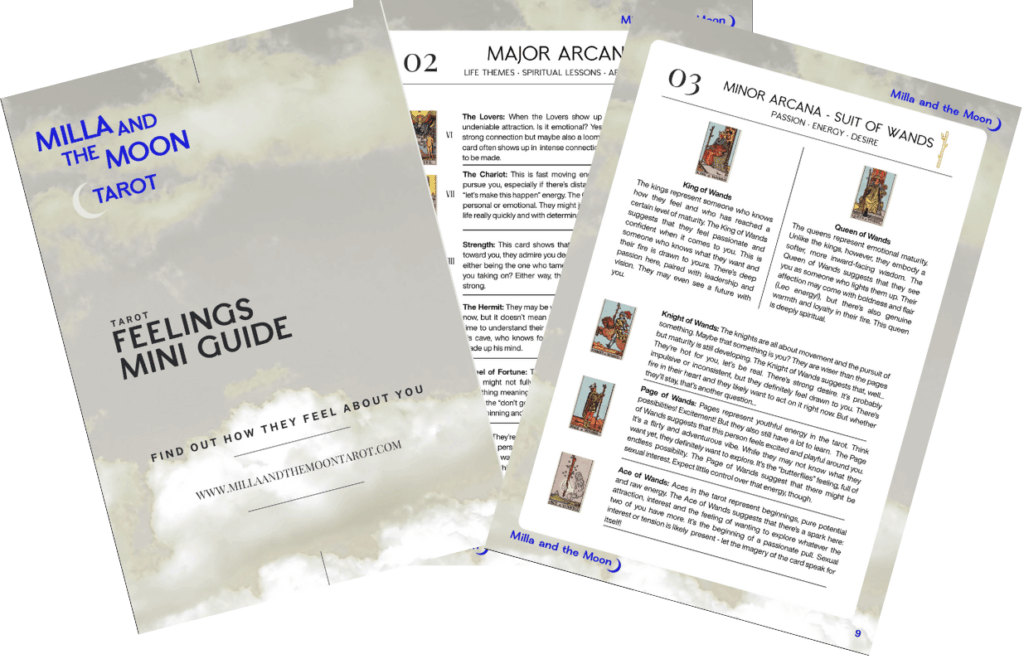
Or start here, with the free Mini Feelings Guide: